Outcome Proof
PageSpeed results you can verify
Field Core Web Vitals and Lighthouse lab scores from oxfordsummerschools.com. Re-run any report at pagespeed.web.dev.
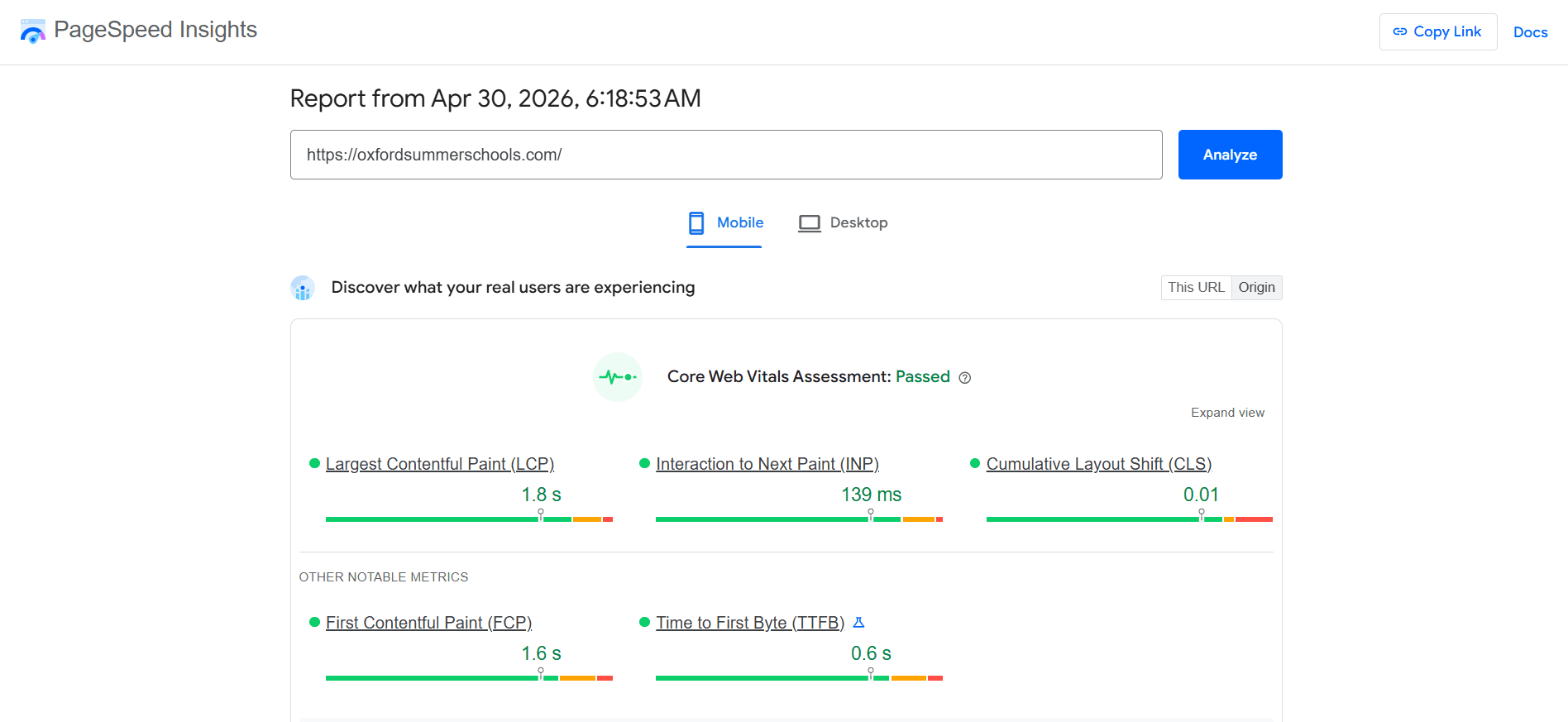
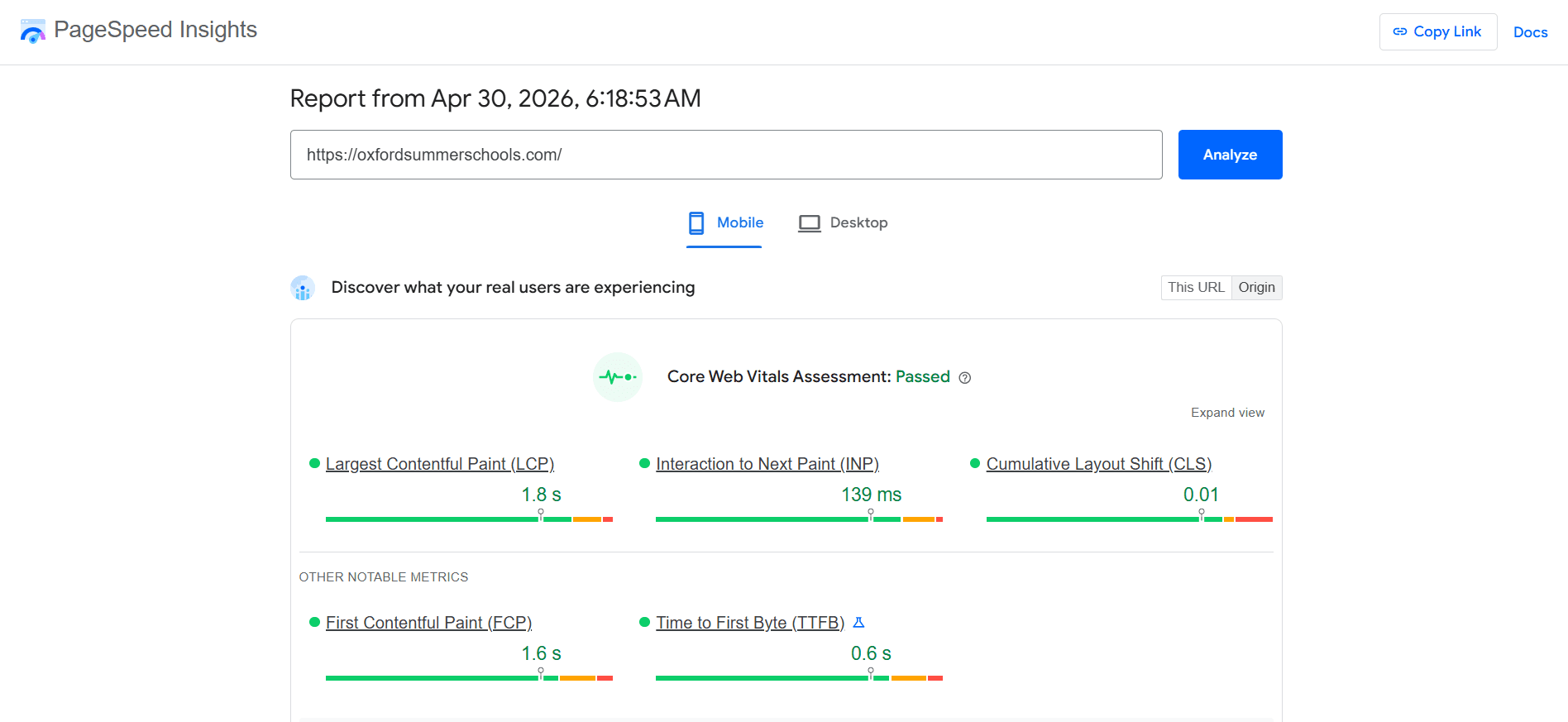
Mobile · field data
Apr 30, 2026 · PageSpeed Insights mobile
Core Web Vitals passed
- LCP 1.8 s
- INP 139 ms
- CLS 0.01
- FCP 1.6 s
- TTFB 0.6 s
Desktop · field + lab
Jul 20, 2026 · PageSpeed Insights desktop
Core Web Vitals passed
- LCP 1.5 s
- INP 69 ms
- CLS 0.06
- FCP 1.3 s
- TTFB 0.3 s
Screenshots
Performance snapshot
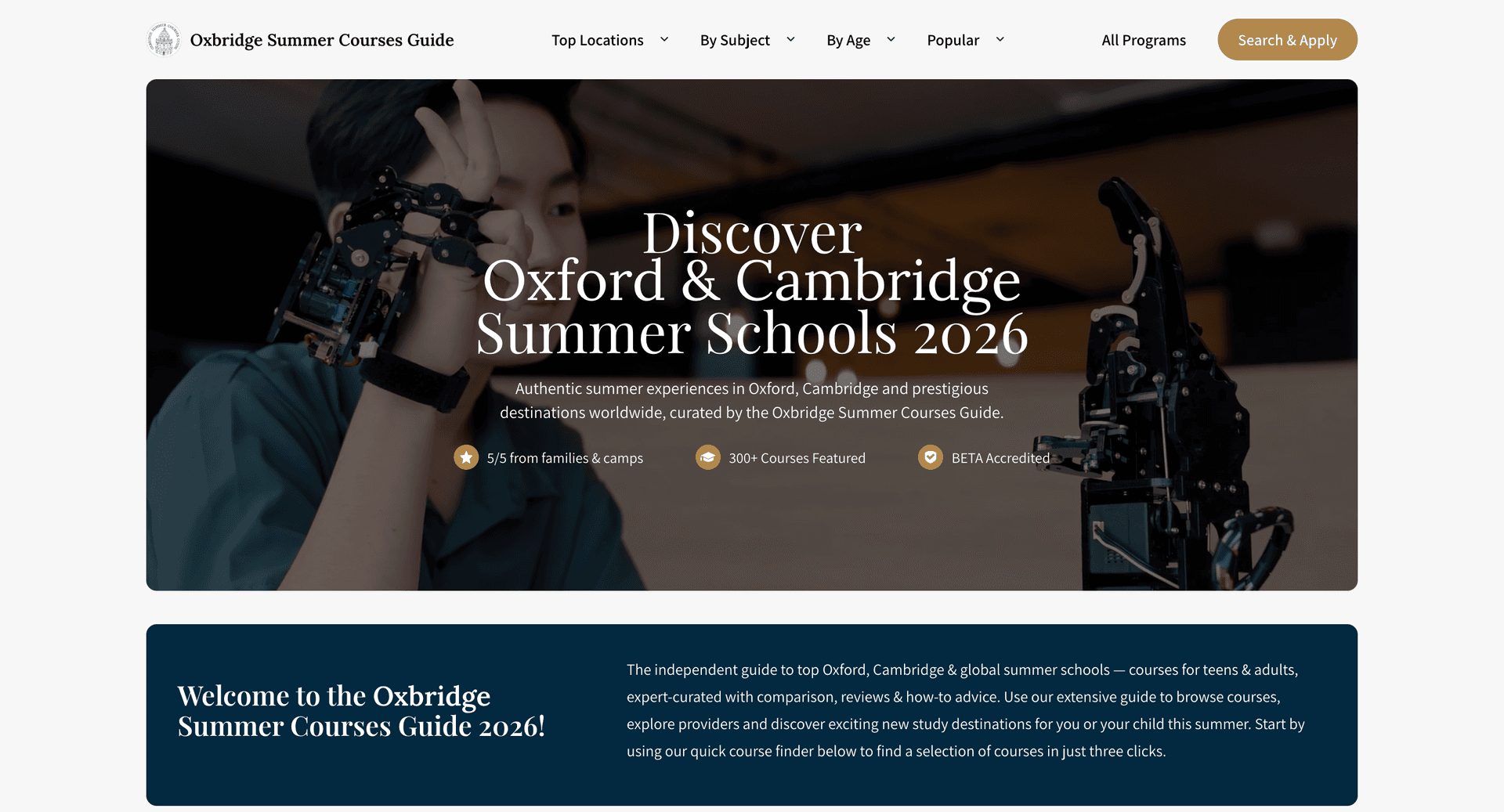
Headless WordPress + Next.js for a competitive education directory — The Oxbridge Summer Courses Guide is an independent platform helping families discover Oxford, Cambridge, and global summer schools. We delivered a Next.js front end powered by the WordPress API — editors keep WordPress, visitors get a fast, crawlable directory.
The challenge: Families need one authoritative place to compare 300+ courses across destinations (Oxford, Cambridge, London, Ivy League campuses, boarding schools, and more), subjects (medicine to AI, law to leadership), and age groups (8–12, 13–15, 16–18, adults). That requires clean information architecture, faceted discovery, and page structure search engines — and AI overviews — can actually understand.
Architecture: WordPress remains the CMS for programs, destinations, subjects, and editorial content. The public site is a Next.js + React front end that pulls content through the WordPress API. Static generation where it matters, typed content models, and UI that does not work against a 90+ performance budget.
Measured results (PageSpeed Insights, oxfordsummerschools.com):
- Mobile (Apr 30, 2026): Core Web Vitals Passed — LCP 1.8s, INP 139ms, CLS 0.01, FCP 1.6s, TTFB 0.6s
- Desktop (Jul 20, 2026): Core Web Vitals Passed — LCP 1.5s, INP 69ms, CLS 0.06, FCP 1.3s, TTFB 0.3s; Lighthouse lab scores 90 Performance, 100 SEO
Screenshots in the gallery above match reports you can re-run at pagespeed.web.dev.
Directory features: Browse by location, subject, and age; curated destination hubs (Oxford 290+ courses, Cambridge 159+, and global campuses); provider comparison; news and advice content; and FAQ structure shaped for search and AI answers.
Key features: Headless WordPress via API, Next.js front end, faceted course discovery, crawlable destination and subject pages, responsive UI/UX, and Core Web Vitals targets set before build — not bolted on after launch.
Why this stack: This is the pattern we recommend for content-heavy directories that outgrow a monolithic WordPress theme: keep the editorial workflow in WordPress, serve the public experience through Next.js for speed, SEO control, and long-term maintainability. Same philosophy as our Best Summer Courses Guide build.
Planning a headless WordPress or Next.js directory? Migration service · Book a consultation from DevCritters.